I had a great time teaching a handful of extension classes at Cabrillo College this summer! It was a nice mix of lecture , hands-on design, and guided gameplay, and I wanted to share the experience of my summer experiment in teaching in a new setting and format.
The Star Wars Crash Course
The Star Wars Crash Course was a great excuse to update a bunch of existing material and to pursue some new discoveries. I mean, since I last taught a Star Wars class, there have been multiple new versions of Greedo shooting first, and the whole Maclunkey thing happened. Very fun to dig back into!

I also got to include a ton of newly published behind-the-scenes info and imagery from J.W. Rinzler’s truly fantastic The Making of Star Wars series of books.

After expanding and presenting it, think I need to change the name of this class, since it’s best parts are the where we plunge into esoterica and weird stories (the Wilhelm scream, William Hootkins, 1970s variety shows, etc). It’s less a Crash Course than a series of deep dives, plus production history, social context, nerding out on visual effects, etc. I’ll need to give it some thought.
This was also the first of my extension courses where I got to see the tremendous diversity of age and experience among my students. Over my 20+ years of teaching university courses, I’ve taught thousands of students, but they were mostly all in the same age range: 18-25. Sometimes I’d get an older returning student, but those are usually a rarity. For this class, I had ages ranging from mid-20s to maybe 60s and everything in between. I had solo students, couples, friend-sets and a father/son team. It was awesome! And it felt different and great!
Hands-On Game Design and Prototyping
My Hands-On Game Design and Prototyping was also really fun and also a chance to revise and expand some existing workshop and assignment material. Another great mix of experience levels among students!
We started with an exercise that I’ve had great luck with: playing, discussiong and modifying the card game War. Having more classtime than I have in the past, I had pairs play a full game of War and note down the length of each game . The hope was to discuss how long a game takes to play and also to give them time to experience the whole game experience.
So that didn’t work.
In the past, I had the class play for 10 minutes or so, and it always felt too short. This time, seeing how bored players were getting, I called it before we had a complete set of winners. I can be merciful.
We discussed why gameplay felt so long, player agency, and aspects of the game that they didn’t like and would want to change. We then made a list of all the affordances we could think of for our deck of standard playing cards.

I gave each student a prototyping kit with their own Bicycle card deck, some blank-faced Bicycle cards, dice, timer, clear card sleeves, etc.

We talked about ways to use each and then I turned them loose to work in pairs to design and test simple modifications of the rules for War to change, and hopefully improve the gameplay experience.
Again, this was an exercise that worked better in previous, time-constrained versions of this class. I think part of the problem was how much resentment had built up for War already. The students came up with some interesting modifications, but it was not as rich of a selection as I’ve had in the past, and certianly not the level of enthusiasm I’ve seen for their variations. Time constraints are your friend!
I got fantastic feedback from the class, and have a good idea about how I can improve it for the next time. I also found some parts I want to bring back to my long-form university courses.
Enter the Dungeon: Demystifying Tabletop Roleplaying Games
The “intro to Dungeons & Dragons” class was the most successful of the three, in my opinion. I used what I’ve learned teaching my Adventure Design class at UCSC, which uses a different, often indie, tabletop roleplaying game each time I teach it. Because nearly all of my students are new to the game system we’re using, and many are new to TTRPGs in general, I always include some “what it is and how to play” material. All of that was useful here.
Also useful was adopting Shadowdark for this class. Designer Kelsey Dionne set out to fuse the feeling of old school D&D with the modern sensibilities of the current, 5th edition of the game. But also to streamline it for easier onboarding and play at the table. She succeeded wildly! And succeeded in raising US$1.3 million on Kickstarter in 2023!
I’m still a huge fan of Lost Mine of Phandelver and the original 5e Starter Set, but I agree with Mike Shea and others who have described Shadowdark as the best entry point, or even the best starter set for Dungeons & Dragons, especially having now put it to the test.
It was also great that Kelsie sells printed versions of the Player Quickstart Zine in a 4-pack for US$19. So it was easy for me to buy enough so that each student started with their own printed copy and a set of dice and still keep the materials fee low for the class.
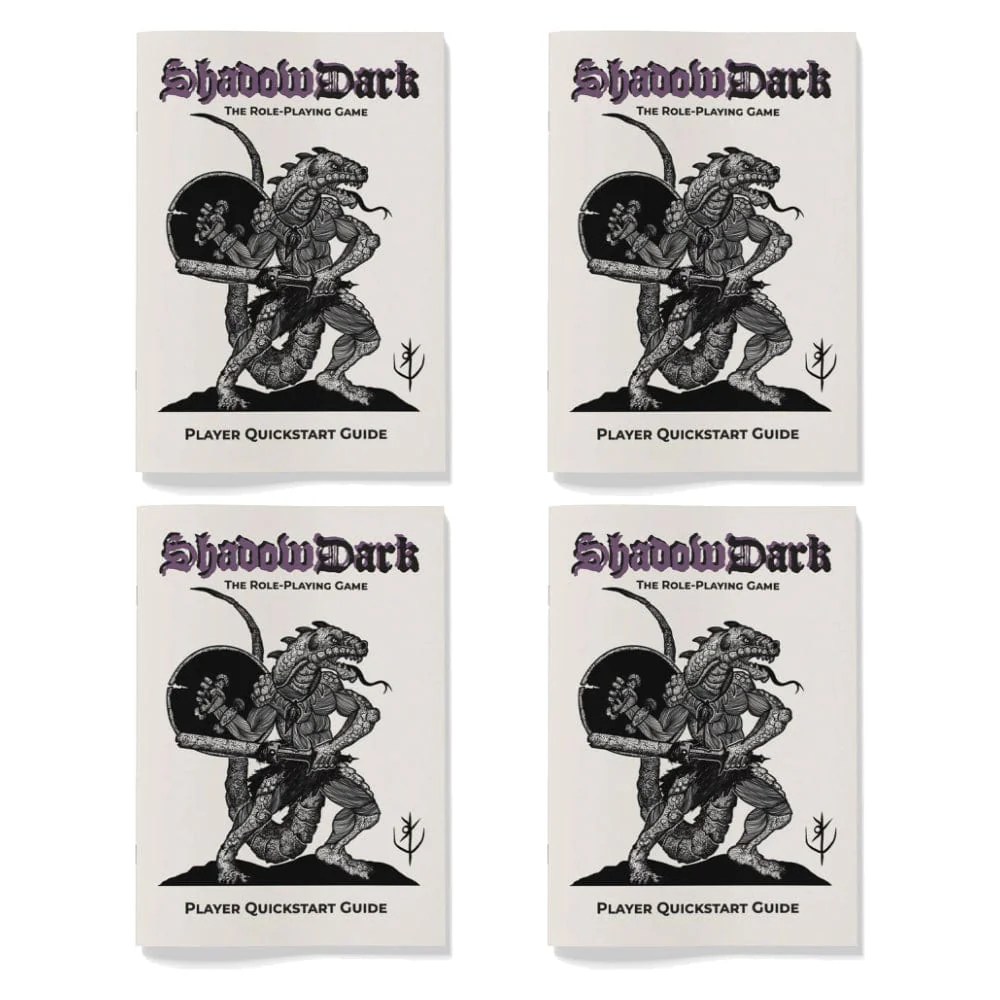
The first of the two, 3.5 hour classes was a mix of lecture and discussion of tabletop RPGs and step-by-step rolling up of characters. The second class was mostly gameplay! We had 9 students, so I split them into two groups, so students would have an opportunity to both play and observe play. After going back and forth about what adventure to use for this class, I opted to just use Lost Citadel of the Scarlet Minotaur from Kelsie’s Game Master Quickstart Guide.
It worked out great, and by the end students were sharing contact info with each other to try to arrange time to keep playing together. I also had several requests for me to teach a class specifically for first-time game masters. It had the desired effect!
I’ve already got Enter the Dungeon on the schedule to run again in October (see below), and one change I’ll be making is to make sure that there is a chance to try combat, even if it’s a tutorial test-drive before we start playing in earnest. Lost Citadel of the Scarlet Minotaur is a good first taste of dungeon crawling, but all of the initial encounters are traps or environments, which were instructive, but there was no combat, which is kinda important in an introductory class. Easy enough to fix!
Final Thoughts
I’m so glad that I tried teaching extension courses this summer! I learned a ton and got to evangelize things I care about to new audiences. I’m especially proud of Enter the Dungeon, and excited to expand on it as a tool for making new players and especially new game masters.
If you already teach at any level, be it K-12 or in higher education, and you have a think you love that you maybe don’t get a chance to teach in your day job, I highly recommend looking into your local community college or universities to see what their extension programs look like. And, if you are not a professional teacher, but are interested in teaching, extension classes can be a great place to start, especially if you have deep knowledge and experience in an area that you want to share.
And, if you have been running tabletop role playing games at your friendly neighborhood game store, or wishing that they had games for new players, you might consider using a class like Enter the Dungeon as another way to bring folks into the hobby!
Extention classes are a great way to evangelize the things you love!
Enter the Dungeon – Demystifying Tabletop Roleplaying Games
01:00 PM – 04:30 PM on Saturday, October 19 and Saturday, october 26

Tabletop roleplaying games are a fantastic way to spend time with your friends and games like Dungeons & Dragons have become a genuine cultural phenomenon. Whether you are new to tabletop roleplaying games, or you’ve played once or twice; whether you are 19 or 99; or whether you haven’t played for a long time and want to come back to the hobby, this will give you the chance to learn and play in this creative environment with a group of like minded folks. You will learn the basic concepts behind roleplaying games and having shared adventures, both as a player and as a Game Master. Unlike other tabletop games, at their heart, roleplaying games are a form of collaborative, improvisational storytelling. You will explore different games, starting with D&D, which will help guide you to find other games that interest you. Tad will discuss how to use published adventure scenarios and also make your own. And, of course, you will play some short sessions in class! You will go home with a renewed or new enthusiasm for roleplaying games, and a set of standard dice common to most games.
Come on your own or bring a friend (or two). Also bring a notebook and a pen or pencil, drink, some snacks, and wear comfy clothes for this afternoon of community building through creative gameplay.
 TADLECKMAN.COM
Leave a comment